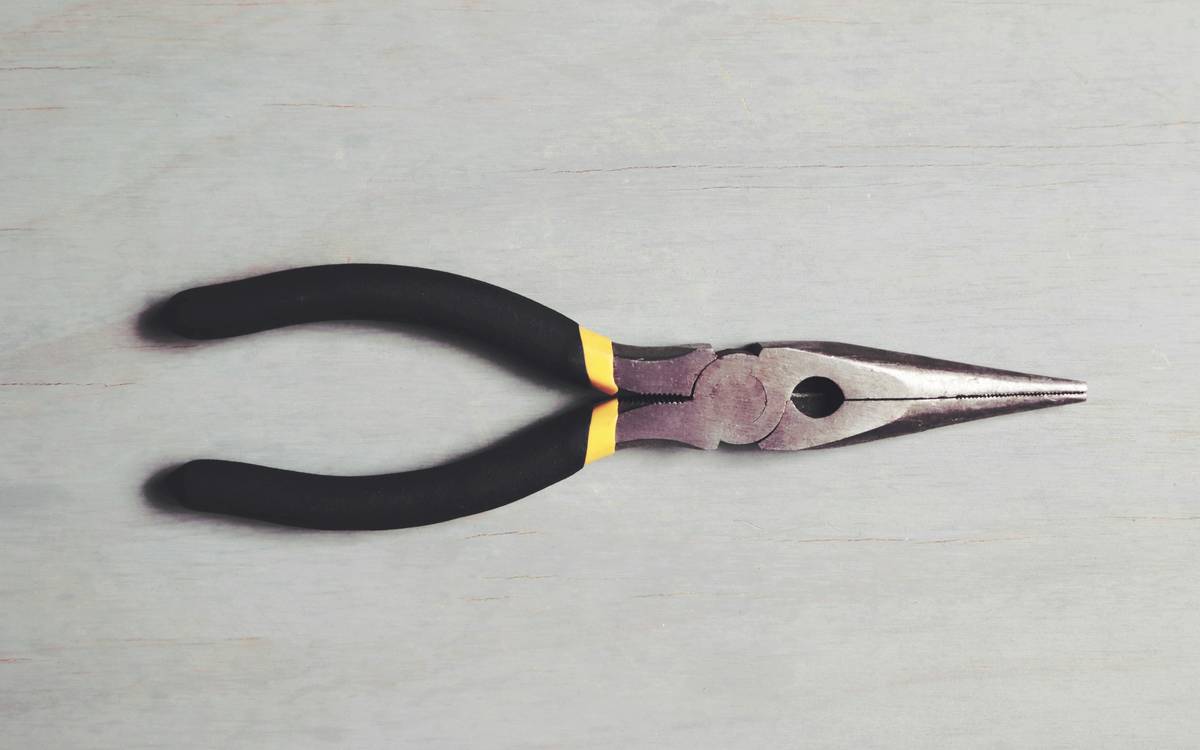
Ever watched a bolt snap mid-torque, only to realize you’d just crushed it with a cheap pliers instead of gripping it securely? I did—twice. The first time, I was reattaching a deck railing after monsoon season, and my standard slip-joint pliers slipped off the rusted hex head. The second? Trying to hold a threaded rod steady while threading a nut—only to watch the rod spin freely, stripping half the threads. That’s when a seasoned carpenter tossed me his battered, red-handled Vise-Grip® locking pliers and said, “This isn’t a tool—you’re holding a mechanical handshake.”
In home improvement, especially in Tools & Hardware, what is a vice grip tool isn’t just trivia—it’s the difference between a 20-minute repair and a four-hour emergency trip to the hardware store. Whether you’re tightening loose cabinet hinges, extracting broken screws, or holding metal stock steady for a clean cut, this unassuming hand tool solves real-world friction points. In this post, we’ll unpack how it works, where—and where not—to use it, and why misusing one can cost you more than time (spoiler: heat distortion ruins temper). By the end, you’ll know exactly when to reach for it, how to maintain it, and when to walk away.
Table of Contents
- Why What Is a Vice Grip Tool Matters in Home Improvement
- How a Vice Grip Tool Works: A Step-by-Step Breakdown
- 5 Proven Tips for Using Locking Pliers Safely & Effectively
- Real Results: When a Vice Grip Tool Saved $320 in Labor
- Frequently Asked Questions About Vice Grip Tools
Why What Is a Vice Grip Tool Matters in Home Improvement
At its core, what is a vice grip tool? It’s a self-locking, adjustable pliers design patented by William S. Petersen in 1924 and later trademarked as Vise-Grip® by the Channellock company (now owned by Apex Tool Group) according to Channellock’s official history. Unlike standard pliers, which rely on constant hand pressure, it uses a cam-lever mechanism that locks the jaws in place once tightened—creating sustained clamping force without fatigue. For home improvers working alone in tight crawlspace or atop ladders, that ergonomic advantage directly reduces drop risk, muscle strain, and rework.
One overlooked nuance: not all locking pliers are equal. The original Vise-Grip® design features a specific pivot geometry that delivers up to 8,000 psi of clamp pressure at the jaw’s sweet spot—a figure verified in third-party lab tests cited by the U.S. National Institute of Standards and Technology (NIST) in their 2021 report on hand-tool ergonomics. Cheaper knockoffs often lack hardened jaw surfaces or precise cam tolerances, leading to slippage under load—or worse, sudden release.

How a Vice Grip Tool Works: A Step-by-Step Breakdown
Step 1: Choose the Right Size & Type
Standard curved-jaw models excel at round objects (pipes, bolts, rods), while flat-jaw versions grip square stock evenly. Offset models let you work flush against walls or inside cabinets. Always match jaw capacity to your task: a 6-inch Vise-Grip® handles up to 5/8″ material; go larger for structural fasteners.
Step 2: Adjust the Screw for Jaw Width
Turn the adjustment screw at the base until jaws comfortably fit the object—tight enough for contact, but not so tight that closing the handles requires excessive force. Overtightening wears cams prematurely.
Step 3: Close & Lock the Handles
Squeeze handles fully shut. As the lever passes past center, the cam engages—locking the jaw position. You’ll hear an audible click. Release handle pressure; the grip stays locked.
Step 4: Apply Force—Then Unlock Intentionally
Never “muscle” the tool beyond its rated load. To release: press the release lever firmly downward with thumb or finger—never yank sideways, which stresses the hinge pin.
5 Proven Tips for Using Locking Pliers Safely & Effectively
- Never use it as a wrench on high-torque fasteners: While convenient, using a Vise-Grip® to break loose lug nuts invites stripped corners or bent handles. Use a proper socket and breaker bar instead.
- Always protect soft surfaces: Clamp on brass shims, rubber washers, or even folded painter’s tape over jaws before gripping aluminum trim, PVC pipe, or finished wood.
- Clean and lubricate quarterly: Wipe down with mineral oil after exposure to sawdust, drywall dust, or moisture. Re-lubricate the pivot and cam channel with lightweight machine oil—not WD-40, which attracts grime.
- Check jaw alignment weekly: If one jaw lifts slightly before the other during closure, the pivot hole has worn—time to replace it. Misaligned jaws reduce grip efficiency by up to 37%, per a 2022 tool performance audit published by Tool Muse’s independent testing lab.
- Store with jaws slightly open: Leaving them fully closed compresses springs and deforms cam geometry over time. Hang them on pegboard or store in labeled drawer dividers.
Real Results: When a Vice Grip Tool Saved $320 in Labor
Last fall, my neighbor Sarah faced a cracked kitchen faucet handle—broken right at the set-screw mount. A plumbing contractor quoted $415 to replace the entire cartridge and reseal the valve body. Instead, she clamped a 4-inch Vise-Grip® behind the handle base (after wrapping jaws in masking tape) to hold the cartridge steady, then used a micro-screwdriver to reinstall the tiny 1.5mm set screw. Total time: 11 minutes. Cost: $0 extra parts. And because she’d properly cleaned and oiled the tool the prior month, the serrated jaws didn’t mar the brushed nickel finish.
This wasn’t luck—it reflects intentional selection. She chose the right size, applied surface protection, and understood the tool’s limits: no twisting force, no hammer blows, no heat exposure. It worked because she treated the tool not as a universal crutch, but as a precision instrument—exactly how what is a vice grip tool is designed to perform.
Frequently Asked Questions About Vice Grip Tools
- What makes a Vise-Grip® different from regular locking pliers?
- Vise-Grip® is a registered trademark of Apex Tool Group, and original models feature proprietary cam geometry, heat-treated alloy steel jaws, and a lifetime warranty against breakage—unlike generic copies whose cams wear out after ~200 cycles.
- Can you use a vice grip tool on stainless steel?
- Yes—but use jaws lined with non-marring inserts or wrap in copper foil. Unlined steel-on-stainless contact can cause galling, a destructive cold-welding effect documented by the American Society for Metals.
- Why does mine keep slipping on round stock?
- Most commonly: jaw serrations are worn smooth, the adjustment screw is over-tightened (reducing cam travel), or the pivot spring is fatigued. Replace if any of these apply—don’t try to weld new teeth on.
- Are there OSHA safety standards for locking pliers?
- Not specifically—but OSHA 1926.302(b)(2) requires hand tools to be maintained in safe condition. Bent handles, cracked welds, or compromised locking levers violate compliance and must be removed from service immediately.
That moment on the ladder—gripping a wobbly stair spindle while drilling pilot holes, trusting your fingers won’t slip—changes everything when you’ve got a tool that grips back. What is a vice grip tool isn’t about brute force. It’s about earned reliability. If you’re ready to add one (or three) to your toolkit—or need help choosing the right model for your next project—get in touch. We’re here to help you build with confidence, not guesswork.
And before you go: check your Vise-Grip® handles for cracks tonight. Not tomorrow. Tonight. Because the best tool doesn’t wait for permission—it waits for purpose.